



repuestos de prensas hidráulicas
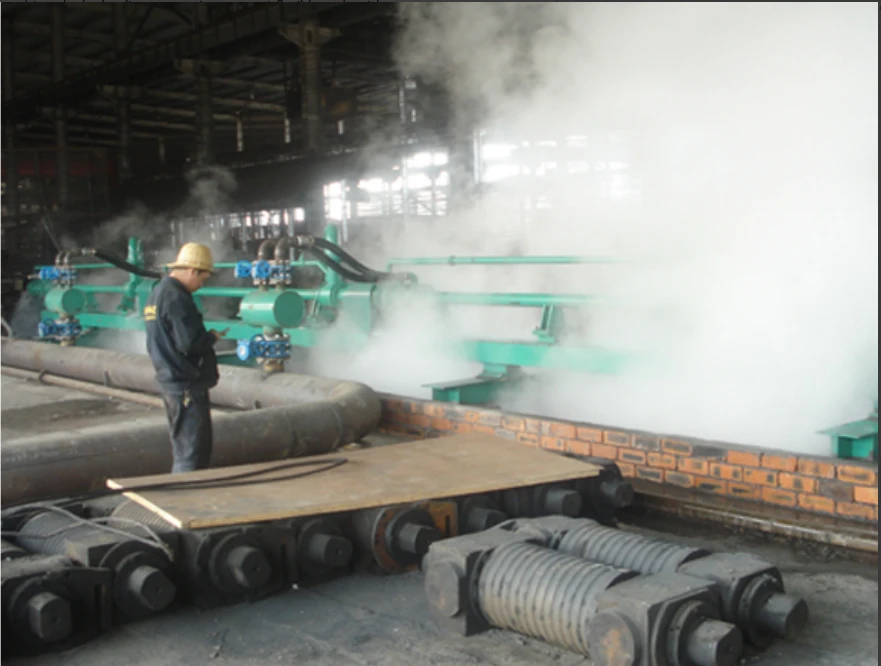
Water Quenching System for Bar & Wire: What’s Really Changing on the Mill Floor If you spend time around long-product mills (I do, more than I probably should), you’ve likely heard the same refrain: how do we hit higher strength classes without drowning in alloy costs? The short answer is the water quenching process built into a reliable, controllable line. YWLX’s Water Quenching System, out of No.1518, LAR Valley Int’l, Guang’anmen Avenue, Xicheng District, Beijing, 100055, leans on a POMINI-style approach—controlled rolling plus controlled cooling—to turn second-grade bar into third-grade performance with 20MnSi. Honestly, the math on opex quickly gets compelling. How the line actually runs (process flow) Materials: typical chemistries include 20MnSi, 20Mn, low-alloy carbon steels common in rebar and wire rod. Methods: finish rolling at target temperature → immediate water quenching process in multi-zone spray headers → self-temper using core heat → cooling bed. The quench produces a martensitic rim with a ferrite–pearlite core; self-temper temp is tuned by line speed and header flow. Quench pressure: ≈0.6–1.2 MPa (real-world use may vary by steel grade/diameter). Nozzle layout: modular, with zone-by-zone shutoff for fine control. Typical hardness profile: surface 350–450 HV; core 180–220 HV. Resulting yield strength uplift: often +15–30% vs. non-quenched baseline. Specs that plant managers ask for Parameter Water Quenching System (YWLX) Notes Product size range Bars Ø8–40 mm; wire rod 5.5–16 mm ≈ Depends on mill layout Header material Stainless (SS316) + treated carbon steel Corrosion resistance for high TDS water Pump flow/pressure Up to 1200 m³/h @ 1.2 MPa ≈ Scalable pumps, VFD control Automation PLC + closed-loop temp/speed Integrates with Level 2 Service life 10–15 years with routine maintenance Nozzle wear is the main consumable Compliance, testing, and data YWLX configures lines to meet ASTM A706/A615 yield and ductility targets, GB/T 1499.2 for rebar, and testing under ASTM A370 / ISO 15630-1. In our audits, mills report reduced alloy additions (Mn/Si/V) and lighter cooling-bed loads—operators like that the bar straightness holds up post-self-temper. Third-party certifications typically include ISO 9001 and, where needed, CE marking for machinery. Where it’s used (and why) Construction rebar (Grade 400/500+), seismic zones, bridges, metro lines. Wire rod for fasteners or mesh where strength-to-cost is critical. Mini-mills chasing higher margins with local scrap chemistries. Advantages? Lower alloy bill, tighter property control, and—surprisingly—fewer coil downgrades once tuning stabilizes. Many customers say it “just runs” after week two. Vendor snapshot (quick take) Vendor Control Philosophy Strength Target Opex YWLX POMINI-mode controlled rolling + water quenching process Grade 400/500/600 rebar ≈ Low; alloy savings emphasized Vendor A Fixed-header cooling, limited zoning Grade 400/500 Medium Vendor B Spray + laminar combo, manual tuning Grade 500 Medium–High Customization and integration Nozzle density and angles tailored by diameter mix. Water treatment packages for recycled circuits (TSS, hardness control). Closed-loop logic based on pyrometer data and mill speed. Retrofits for older lines to reduce bed loading and reject rates. Case notes from the floor One north Asia mini-mill swapped heavy micro-alloying for the water quenching process on 12–25 mm rebar. After 6 weeks of tuning, they reported ~22% average yield strength uplift and a 14% reduction in alloy cost/ton. Operator remark (paraphrased, but close): “Once we set speed-to-flow windows, it stopped being fussy.” Author’s note: real production results vary by chemistry, rolling discipline, and water quality. Do the trials. Standards and references ASTM A370 – Standard Test Methods and Definitions for Mechanical Testing of Steel Products. ISO 15630-1 – Steel for reinforcement of concrete – Test methods – Part 1. ASTM A706/A706M – Low-Alloy Steel Deformed and Plain Bars for Concrete Reinforcement. GB/T 1499.2 – Steel for the reinforcement of concrete – Part 2: Hot rolled ribbed bars. EN 10080 – Steel for the reinforcement of concrete – Weldable reinforcing steel – General.

We have successfully executed over 500
projects around the world,
many first-of-their-kind
research projects and products in China, including
We have successfully executed over 500
projects around the world,
many first-of-their-kind
research projects and products in China, including
-
2004
The 1st hydraulic AGC system for hot rolling of ribbon steel
-
2006
The 1st AFC system used for 1450mm skin pass mill
-
2009
The 1st 5-stand tandem line with 2-stand POR & Uncoiler for 650mm ribbon steel
-
2012
The 1st reversing mill for 1380mm strip
-
2016
The 1st soft-rolling system used in skin pass mill
-
2019
The 1st fully automated medium-width tandem cold rolling mill
-
2021
The 1st 5000KN Twin-stand double skin pass mill
-
2022
The 1st coupled pickling line & tandem cold mill with two modes - big roller & small roller
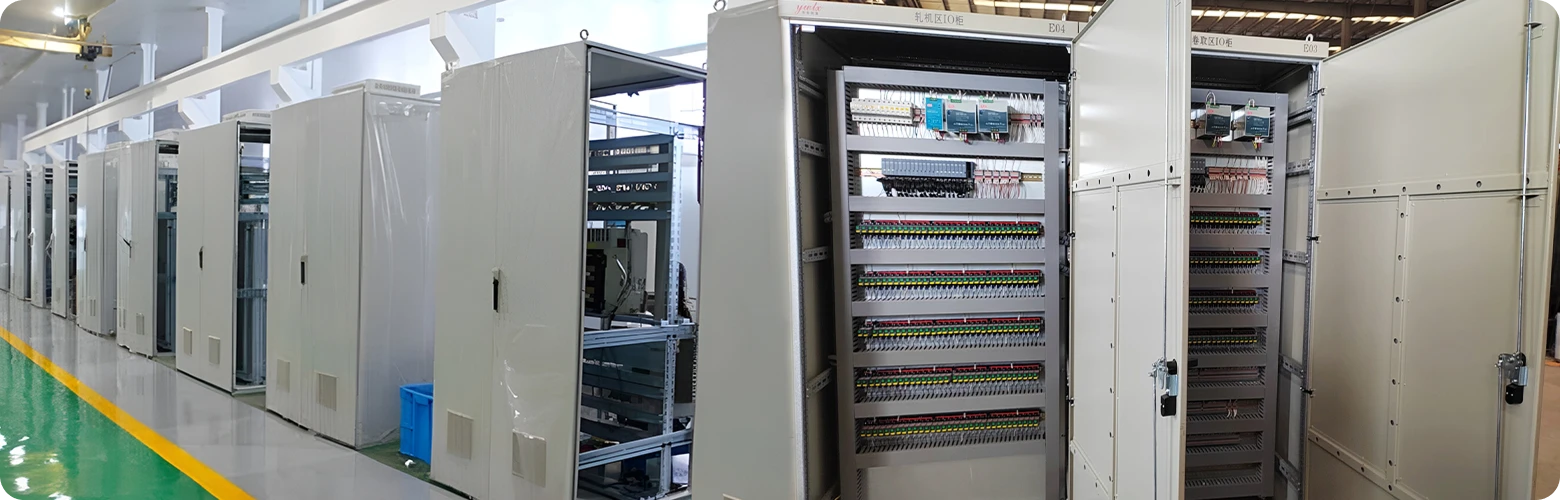

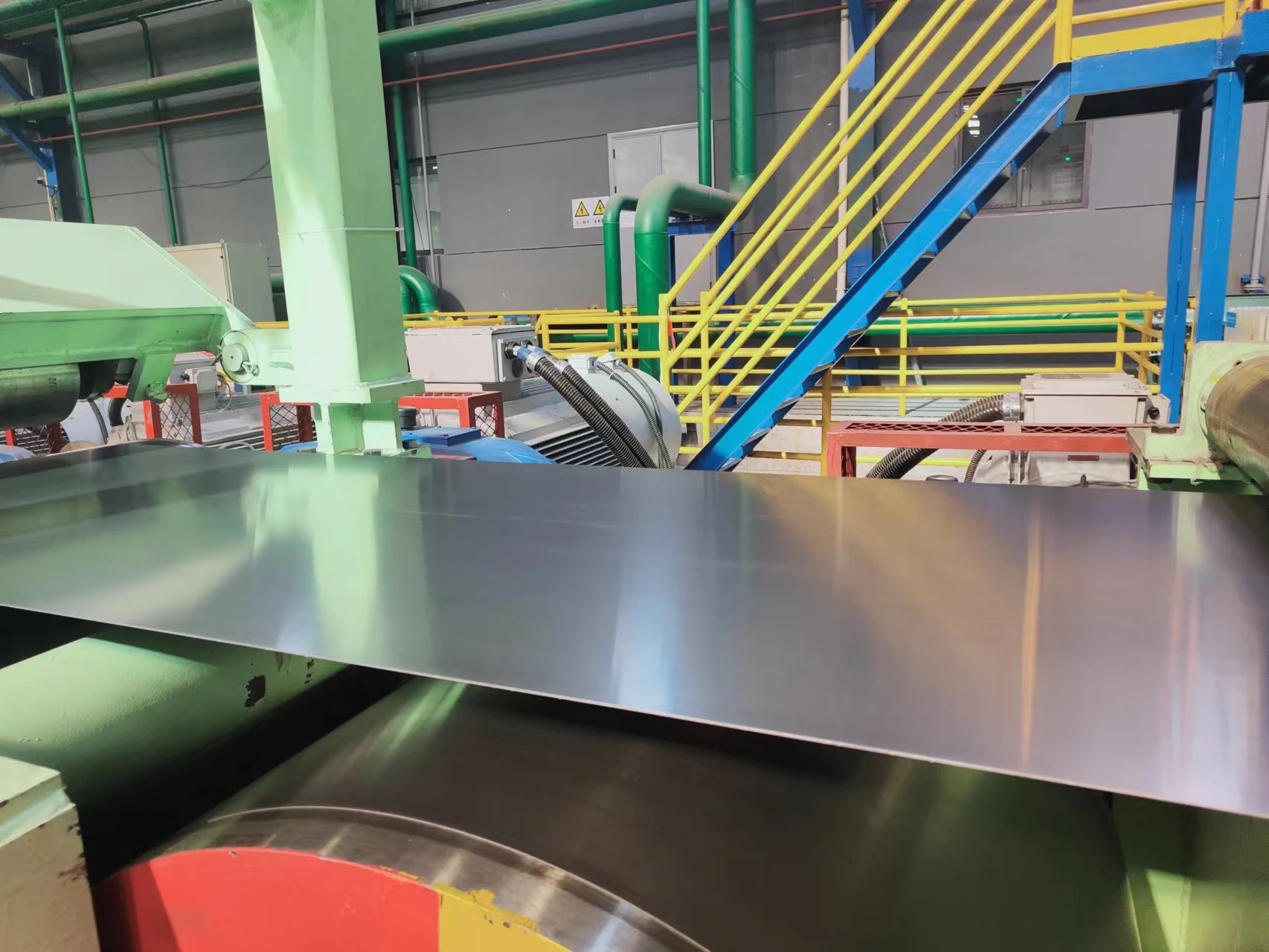

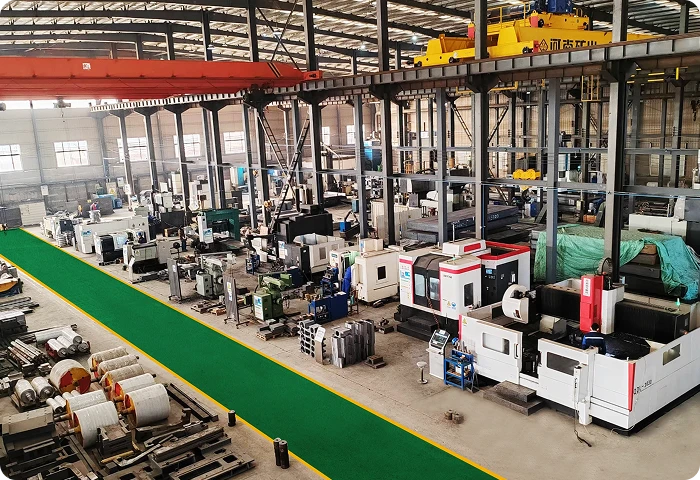
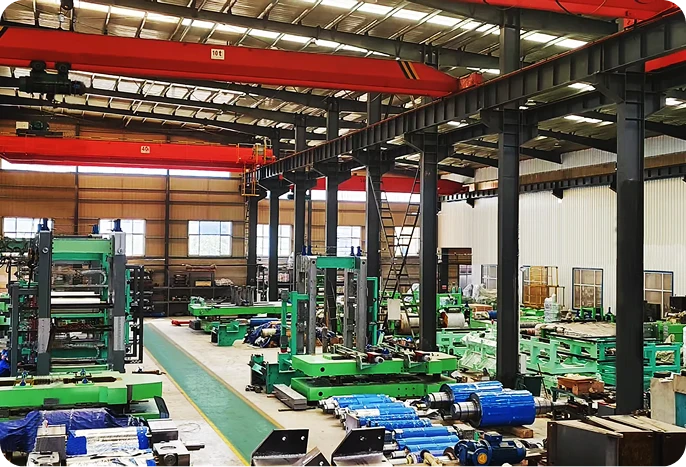
Yang Wang Li Xin operates a state-of-the-art facility over 66,000 square meters,and our manufacturing facility is fully equipped with high-tech machinery and high-capacity cranes. This enables us to handle large work pieces measuring 4.5m in width, 10m in length, and 1.5m in height, guaranteeing our capacity to produce 1800mm skin-pass mills and 1450mm rolling mills. The individual piece can weigh up to 100 tons.


Quality is fundamental to the enterprise survival. We have established a comprehensive and meticulous quality management system and have successfully obtained ISO14000 certification. Starting from the design source, it supervises the entire production cycle, including design, procurement, processing, assembly, in-factory testing, installation, and online commissioning. The workshop is equipped with measuring tools like vernier calipers, spectrometers, hardness testers, and ultrasonic flaw detectors. They are used to check materials and control tolerances to ensure the final equipment meets or exceeds requirements. All products have a unique code, This enables the easy identification and traceability of the equipment components and ensures full control of quality.


-
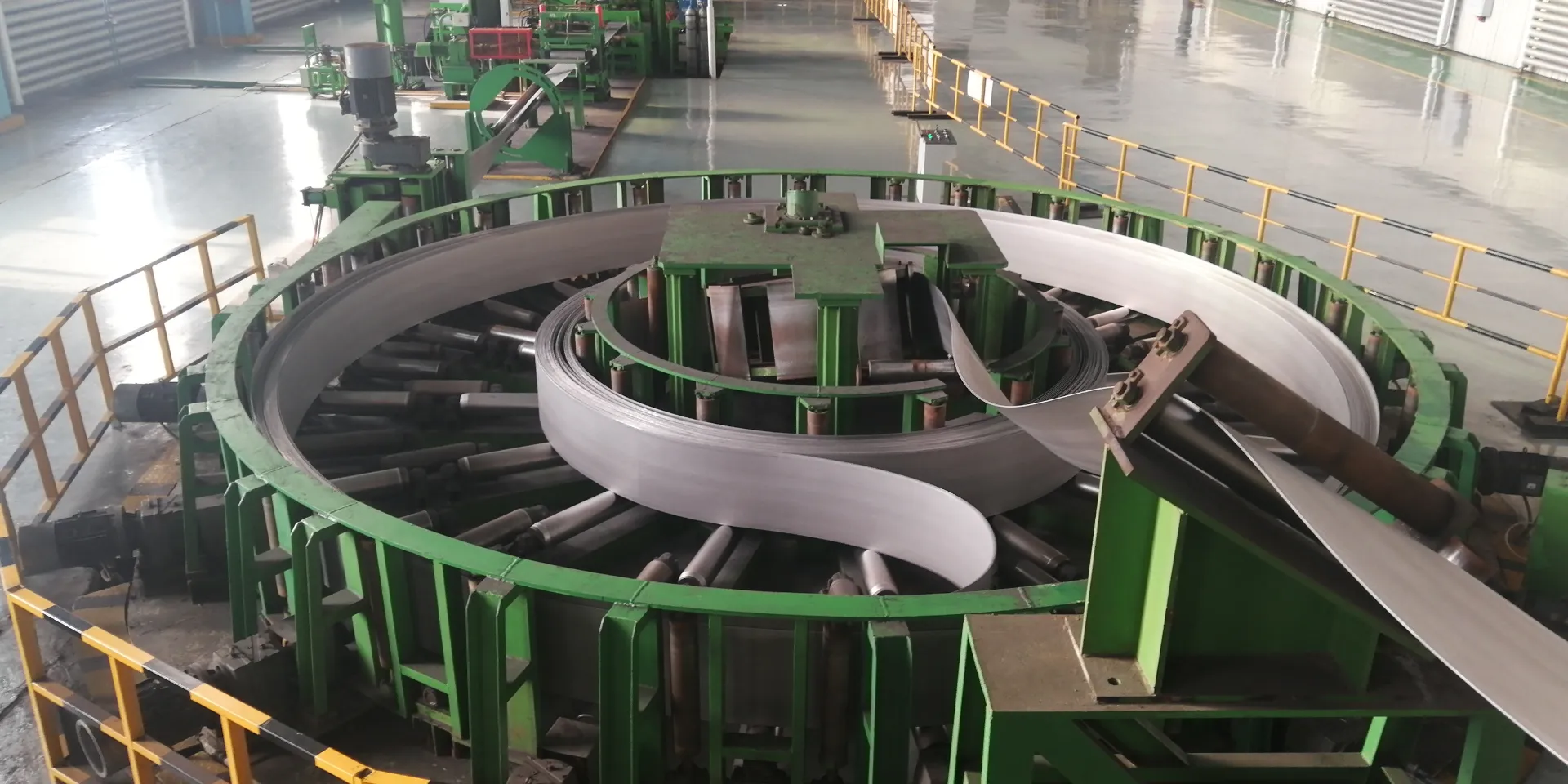 High-Efficiency Automated Packaging Machine for Streamlined OperationsThe demand for industrial automated packaging machines is accelerating in line with Industry 4.0 and global logistics upgrades. This in-depth guide explores automatic packaging systems , reveals process flows, specs, industry data, and authoritative comparisons — focusing on the Skin Pass Mill solution. Actual application scenarios, data-driven insights, and visualized parameters offer a comprehen
 -
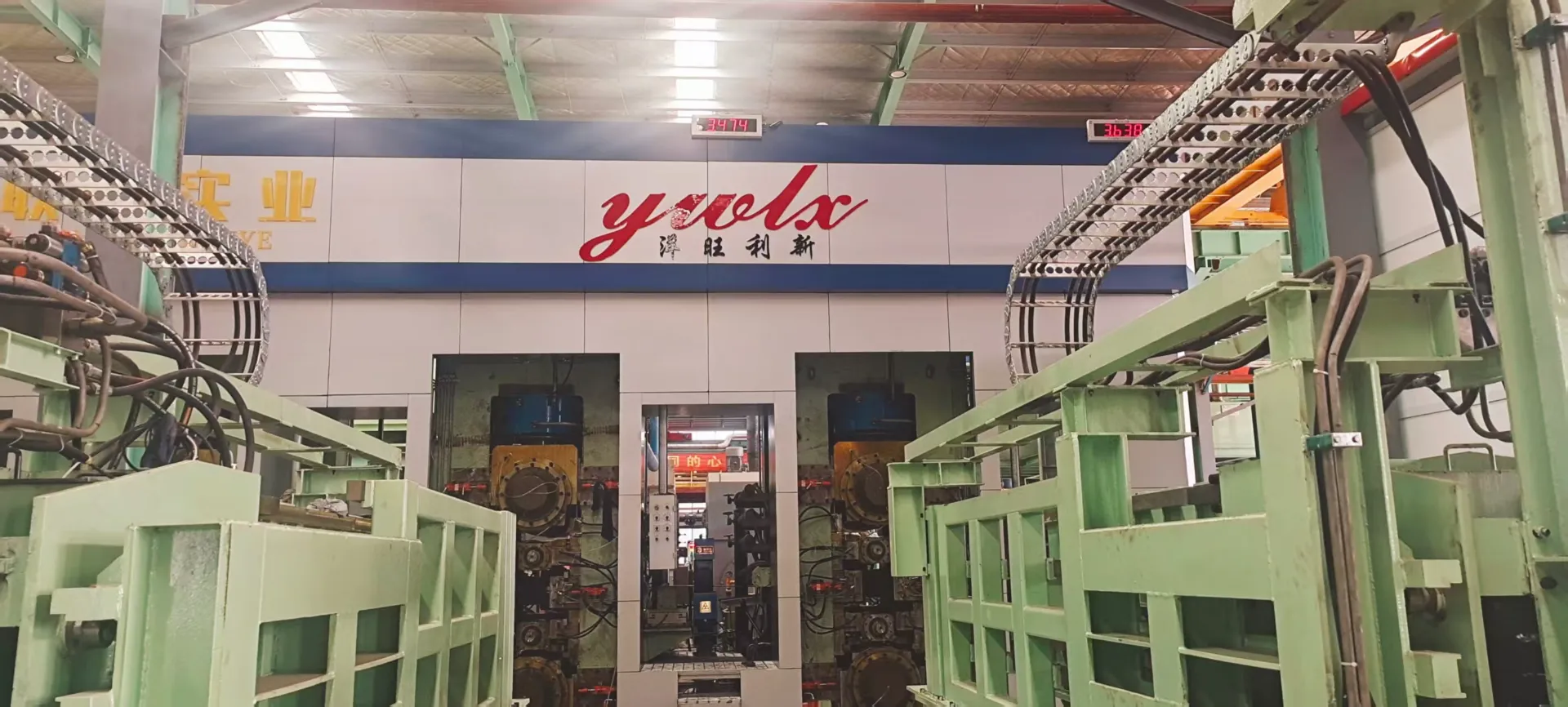 Rolling Factory Expert Insights on Machinery SolutionsRolling factories have emerged as a groundbreaking innovation in the realm of modern manufacturing, revolutionizing how products are assembled and delivered across various industries. Their inherent mobility and flexibility make them an attractive solution for businesses looking to optimize production, reduce costs, and enhance supply chain efficiency. At the core of the rolling factory concept is
 -
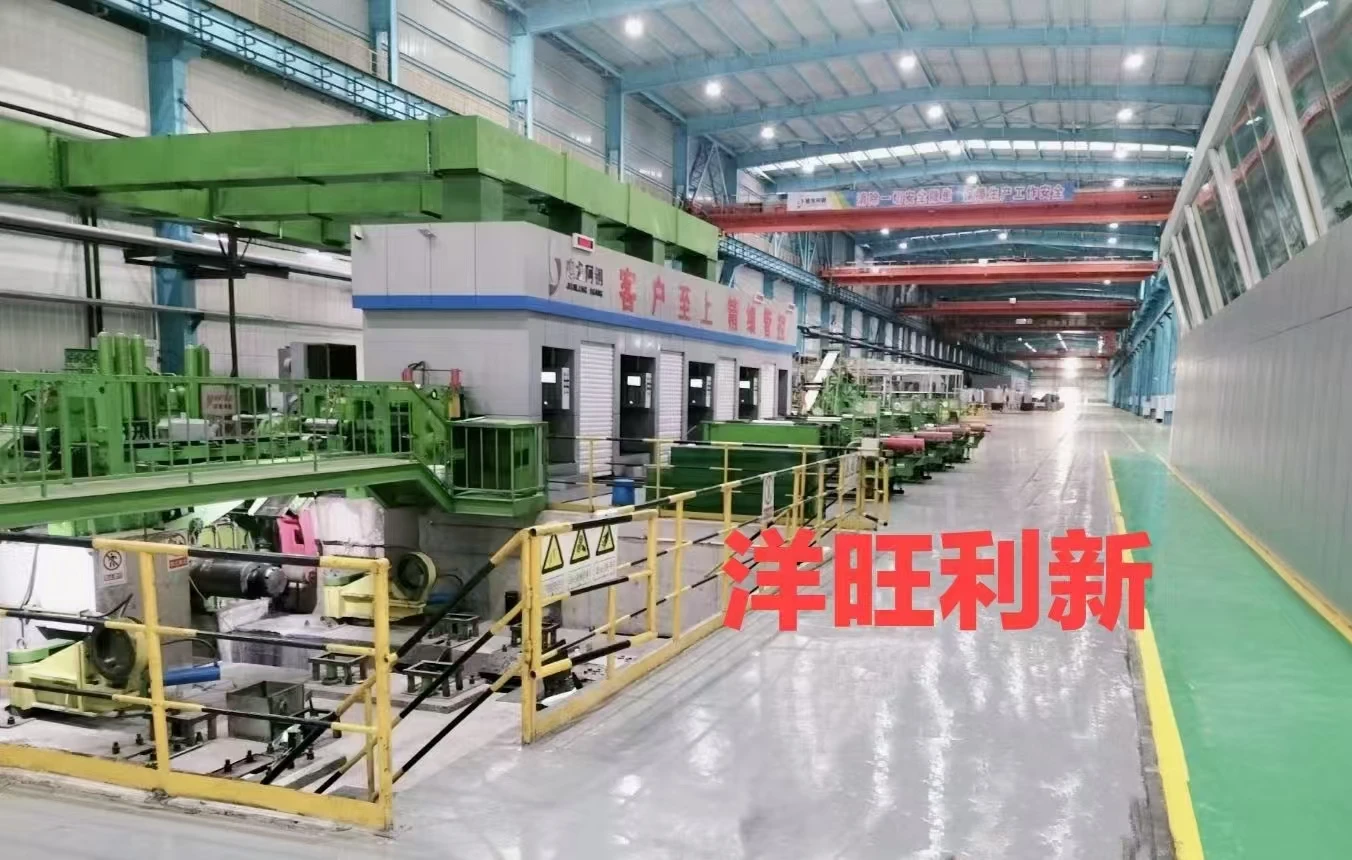 Quality Determinants in Hot Rolling Mill ProductsThe hot rolling mill serves as the critical process stage where fundamental product quality characteristics are established. While steel chemistry is determined during primary production, the hot steel rolling mill controls the thermomechanical processing that develops the final microstructure and mechanical properties. Several interrelated factors contribute to this quality-determining function t


